
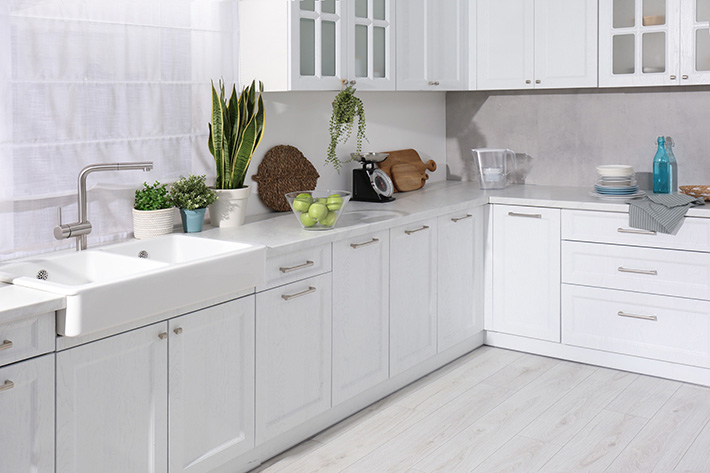
Your dream kitchen is complete, and your countertops are the star. They glisten and shine, are blemish free and you’d like to keep it that way. You have researched the reasons why granite and quartz countertops are an ideal choice, one of which being they are hard to stain.
This stands true for the most part, however there are a few things to know about how a countertop material such as granite or quartz can stain and what you can do about it.
Quartz and granite, popular choices for countertops, have distinct characteristics, including their reaction to staining.
Understanding their susceptibility to stains and identifying the signs is key to maintaining their appearance and longevity.
Quartz Countertops:
Quartz countertops, engineered from natural quartz and resin, are renowned for their durability and non-porous nature. This composition makes them highly resistant to staining compared to natural stone surfaces. However, they are not entirely stain-proof. Certain substances, if left unattended for long periods, can cause discoloration or staining.
Types of Stains:
Food and Beverages: Substances like coffee, wine, tea, and certain acidic foods can leave stains if not cleaned promptly.
Chemical Stains: Harsh chemicals, including some cleaning agents, can damage the resin in quartz, leading to discoloration.
Heat-Related Stains: Excessive heat can burn or discolor the resin in quartz countertops.
Signs to Look For:
-
- Discoloration or darker spots in areas where spills have occurred.
- Surface dullness in areas exposed to harsh chemicals.
- Whitening or cloudiness from heat exposure.
Granite Countertops:
Granite, a natural stone, is more prone to staining due to its porous nature. Sealants can provide a protective barrier, but regular resealing is necessary to maintain stain resistance.
Types of Stains:
Oil-Based Stains: Cooking oils, grease, and cosmetics can seep into granite, causing dark spots.
Organic Stains: Food, coffee, wine, and other organic materials can leave colored stains.
Metallic Stains: Iron, copper, and rust can leave reddish or brown stains on granite.
Biological Stains: Mold and mildew can develop in damp environments, leading to stains.
Signs to Look For:
-
- Dark spots or rings where liquid has been absorbed.
- Color changes in areas exposed to food substances or organic materials.
- Visible rust-like stains from metallic objects.
- Stain Prevention and Countertop Maintenance:
For both quartz and granite countertops, prevention is key. Wiping up spills immediately, using coasters and trivets, and avoiding harsh chemicals are essential practices. Regular cleaning with appropriate cleaners is recommended. For granite, periodic resealing is crucial to maintain its stain resistance.
While quartz is more resistant to staining than granite, both materials can stain under certain conditions. Recognizing the types of stains and their signs can help in taking timely measures to prevent lasting damage. Proper care and maintenance are vital in preserving the beauty and functionality of these countertops.
Are New Countertops on Your List?
Wisconsin Granite Design in Oak Creek installs the highest quality granite, marble and quartz countertops in homes throughout Wisconsin. Our main goal is customer satisfaction and providing the highest quality work by fabricating and installing top of the line countertop solutions at the best price available.
We are a one stop shop carrying hundreds of granite, quartz and marble slabs on site so that you can visit us as, speak with a designer and plan your kitchen or bath remodel at the same place. Call us to schedule a Free Design consultation and see why we are the best choice for stone countertops in the Milwaukee area!