
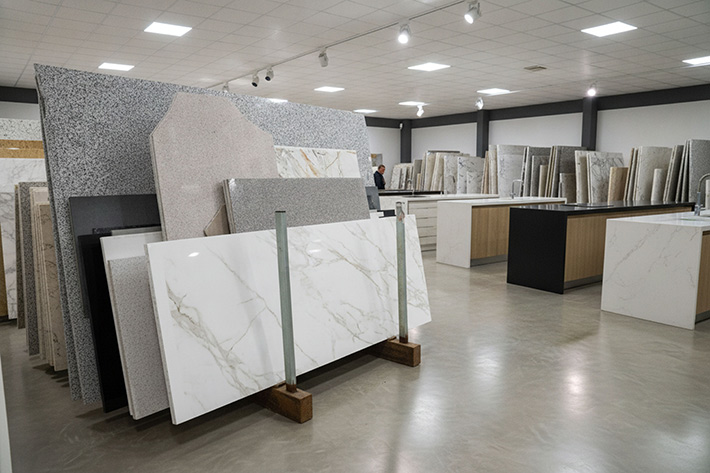
A full kitchen remodel is usually what people imagine when they think about granite, quartz, or marble countertops. The island gets replaced, the perimeter counters are measured, and the whole room changes at once.
Smaller countertop projects deserve attention too.
A bathroom vanity, laundry room counter, bar top, or built-in desk may not need a full slab. In many cases, a countertop remnant can give the space the look of quality stone without requiring the same material commitment as a large kitchen project.
Remnants are pieces left after larger slabs have been cut for other jobs. They are still real countertop material. They come in smaller sizes. For the right project, that can be a practical advantage.
Why Remnants Are Worth Considering
Stone remnants can be a good choice when the project area is limited. A powder room vanity, side counter, or small serving area may only need a modest piece of material. Buying a full slab for that kind of project may not make sense if a remnant can provide the right size, color, and finish.
That does not mean a remnant is a lower-quality option. The material may come from the same granite, quartz, quartzite, or marble used in larger projects. The difference is availability and size.
For homeowners, that can open the door to materials they might not have considered for a full kitchen. A dramatic marble remnant may be too bold for a large island but perfect for a bathroom. A darker granite may feel heavy across an entire kitchen, yet look sharp on a compact bar top.
Small Spaces Can Handle More Personality
Large countertop areas often push homeowners toward safer choices. That makes sense. A stone with strong veining or heavy movement can dominate a kitchen when it stretches across every surface.
Small spaces are different.
A remnant gives you room to choose something with more character because the material is used in a focused area. A powder room can handle a bolder stone. A basement bar can take on a deeper color. A laundry room can feel more finished with a durable surface that does not look like an afterthought.
The smaller scale also makes it easier to coordinate with existing cabinets, flooring, and paint. You are not redesigning the whole home. You are upgrading one hardworking surface.
Best Places To Use Countertop Remnants
Remnants work well anywhere the measurement fits the material.
Bathrooms are one of the most common uses because vanity tops are often smaller than kitchen counters. A stone top can make a simple cabinet look more polished. It also stands up well to daily use when you select the right material for the space.
Laundry rooms are another good fit. Folding counters, sink surrounds, and utility surfaces take regular wear. A remnant can make the room easier to use while giving it a cleaner, more intentional look.
Home offices, hobby rooms, and coffee bars may also benefit from stone. These areas are often built into corners or short cabinet runs, which makes them strong candidates for remnant material.
What To Know Before Choosing A Piece
A remnant has limits because the size is already set. That means you should measure the project carefully before you fall in love with a specific piece.
The fabricator will need to know the cabinet size, sink cutout, edge preference, faucet placement, and any wall conditions that affect the final fit. If the space is slightly too large for the remnant, the piece may not work. If the layout is right, the finished result can look custom because it is still measured and fabricated for your home.
Color matching is another point to consider. If you are trying to match an existing kitchen countertop exactly, a remnant may be difficult unless it comes from the same material batch. If the goal is to complement nearby finishes, you may have more flexibility.
Remnants Still Need Professional Fabrication
A smaller countertop is still a countertop. It needs accurate measuring, clean cutting, proper edge work, and careful installation.
This is especially true when sinks, faucets, or tight wall conditions are involved. A vanity top may be small, but a poor cut around the sink can make the whole project look rushed. A bar top may be simple, but it still needs support and a finished edge that suits the room.
Professional fabrication helps the remnant look intentional rather than leftover. The piece should feel like it was chosen for the space, not squeezed into it.
Choose the Stone That Works for the Space
Shopping remnants is a little different from shopping full slabs. Availability changes. Sizes vary. A piece that works for one bathroom may fail for another.
That is part of the appeal. You may find a stone with more movement, depth, or color than you expected. The key is to bring measurements, photos of the space, and a clear idea of how the surface will be used.
A remnant can be a practical way to bring stone into a smaller project without waiting for a full remodel. It can make a bathroom feel more finished, improve a laundry area’s function, or turn a small built-in into a feature that looks planned from the beginning.
Find the Right Stone Remnant for Your Next Project
Wisconsin Granite Design in Oak Creek works with granite, quartz, marble, quartzite, and other countertop materials for projects of every size. If you’re planning a bathroom vanity, bar top, laundry counter, or another smaller upgrade in the greater Milwaukee area, stop by the Oak Creek showroom to see what remnants are currently available. Their team can help you find a piece that fits your measurements and style, then professionally fabricate and install it for a finished result that looks made for the space.